
Intelligent Integrated Monitoring System Scheme for Power Distribution Room
1、 Product Background
With the rapid development of the power industry, the contradiction between power supply and demand has undergone significant changes, especially with the further acceleration of power enterprise reform. How to use high-tech means to adapt to the market economy, how to improve efficiency, reduce costs, and achieve efficient and high-quality services have become important tasks for realizing the modernization of electricity marketing.
For a long time, the management of power distribution rooms has been one of the weak links in the reliability of power supply system operation and management. Some power distribution room switches trip and the environment in the power distribution room overheats, affecting equipment operation, equipment damage caused by water immersion in the power distribution room, and equipment theft in the power distribution room. These faults are easy to burn out equipment and also affect the normal power consumption of users, but they are often overlooked by people. However, over the years, due to the lack of detection methods for low-voltage distribution networks, it has been common for staff to measure and inspect each distribution device one by one on several typical days each year or quarter. As a result, it is time-consuming and labor-intensive, unable to reflect the real situation in a timely manner or solve practical problems in a timely manner. Therefore, it is necessary to develop and promote monitoring devices for distribution networks.
2、 Product Introduction
1. Backend monitoring system
From the perspective of management intelligence, the system is divided into three layers, namely the main station (supervision center), regional servers, and
The main station of the power distribution room mainly exercises the management responsibilities of high-level departments and summarizes, uploads, and obtains task instructions from higher-level servers. The regional server driving area sub bureau has management responsibilities and directly faces the management of the power distribution room.
In addition to classifying, storing, summarizing, associating, retrieving, and displaying upstream data (including regular data and video data), cloud servers will also process video and image information through visual AI algorithms in complex application scenarios, combined with the local AI function of the intelligent monitoring host in the distribution room, to achieve automatic recognition and deep analysis, replacing heavy manual input.
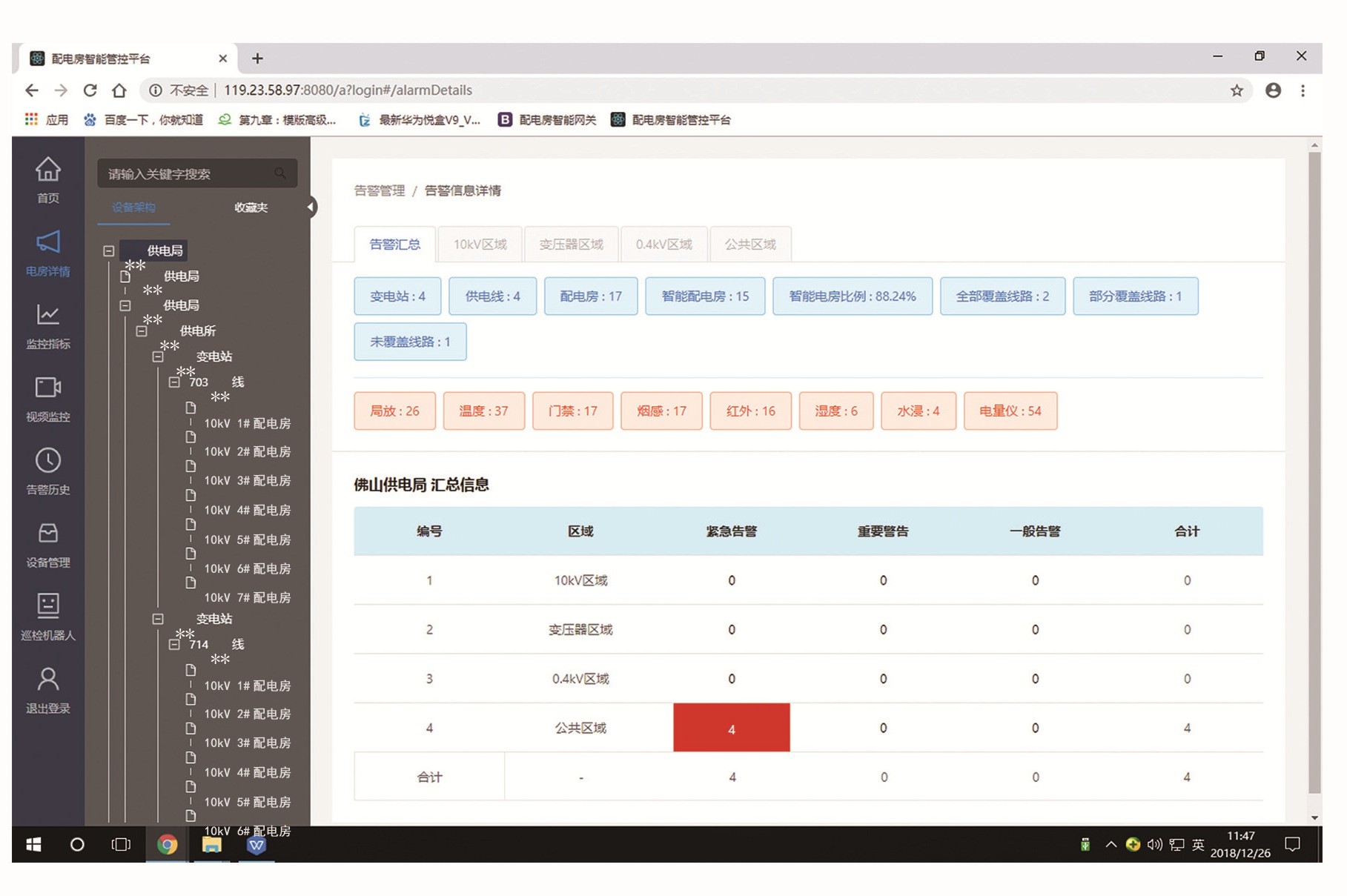
2. System Cloud Platform Interface
Manage relevant business processes through web client applications, click on the map to select any subordinate electrical room within the jurisdiction area, and display real-time monitoring data of the electrical room in a graphical manner, providing control buttons and operation warnings. After adding an external gateway or using an internal network mobile card, the alarm function can be sent to the relevant management personnel's external mobile terminals or phones.
3、 Product Features
Ø The environmental monitoring subsystem implements the following functions
1) Temperature and humidity monitoring subsystem
2) Waterproof immersion monitoring subsystem
3) Gas monitoring subsystem
4) Gate access control and human infrared intervention subsystem
5) Smoke and fire detection subsystem
6) Fixed high-definition camera and high-definition ball monitoring recording and playback subsystem
Ø Function of equipment status monitoring subsystem
1) Temperature detection of switchgear and transformers
2) Partial discharge (omnidirectional ultra-high frequency) monitoring subsystem function
3) Partial discharge (pulse current) monitoring subsystem function
Ø Equipment status monitoring AI function
1) Implement the function of monitoring the position of the switchgear knife switch, SF6 pressure pointer position, fault indicator status, and status indicator status through visual AI algorithms
1. Environmental monitoring subsystem
The environmental monitoring system is a computer network that comprehensively utilizes computer network technology, database technology, advanced communication technology, automatic control technology, new sensing technology, etc. Its monitoring object is the comprehensive environment (including security) in the distribution room. The monitoring system aims to fully utilize human resources, strengthen maintenance support measures, ensure stable equipment operation and substation safety, improve labor productivity and equipment operation and maintenance level, and achieve the management requirements of "data integration, business collaboration, centralized management, and resource sharing".
|
|
|
|
|
Temperature and humidity transmitter | access control | Video monitoring | Water Level Control | New air integrated machine |
|
Environmental monitoring system host |
| ||
Gas transmitter | fan control | |||
|
| |||
SF6/O2 transmitter | air-conditioning control | |||
|
|
|
|
|
Lighting control | audible and visual alarm | Fire Alarm | Infrared anti-theft monitoring | Dehumidification control |
Introduction to Sensors and Control Equipment
ID | sensor | Performance Description |
1 |
host | Real time display of data from all devices, manual control function, support for the upper computer to obtain real-time data, and linkage settings can be made to issue alarm signals according to the set threshold. |
2 |
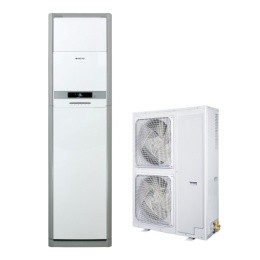
New air integrated machine | By real-time control of changes in environmental temperature, humidity, and particulate matter, the overall indoor environment can be improved. |
3 |
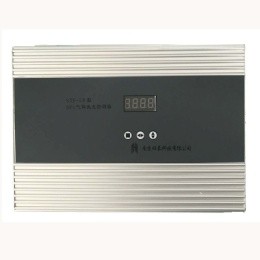
air-conditioning control | When the indoor temperature exceeds the standard, the air conditioner will automatically start to cool down. |
4 |
Dehumidification control | When the indoor humidity exceeds the standard, the dehumidifier will automatically start for dehumidification. |
5 |
fan control | 1. Start ventilation and air exchange at regular intervals 2. Forced start of ventilation and air exchange 3. Automatically start ventilation and air exchange according to the alarm signal. |
6 |
Temperature and humidity monitoring | 1. Real time monitoring of environmental temperature and humidity and uploading data to the host. 2. When the temperature and humidity exceed the standard, start the fan air conditioning, dehumidify and issue an alarm warning. |
7 |
Gas transmitter | 1. Real time monitoring of O3, CO, CH4 gas concentrations and uploading data to the host. 2. When the concentrations of O3, CO, and CH4 gases exceed the standard, start the fan for ventilation and issue an alarm warning. |
8 |
SF6/O2Transmitter | 1、Real-time Monitoring SF6Gas concentration and oxygen content, and upload the data to the host. 2、SF6Start the fan for ventilation and alarm warning when the gas concentration and oxygen content exceed the standard. |
9 |
access control | 1、Door card permissions and time limit settings 2、Door card key dual insurance, only the key can be used to open the door in case of power failure 3、Swipe card to open the door, activate lighting function, automatically record and upload card information |
10 |
Water Level Control | Detect water flooding signals to determine if water flooding has occurred. |
11 |
Smoke Detector | Detect smoke detection signals to determine if a fire alarm has occurred. |
12 |
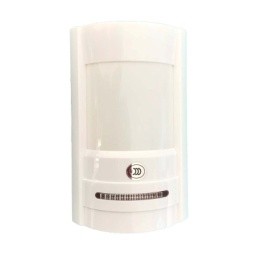
Infrared anti-theft monitoring | 1、Automatically issue an alarm signal in case of illegal intrusion; 2、Automatically start the fan for ventilation and air exchange when entering normally. |
13 |
audible and visual alarm | Provide sound and light warnings when an alarm occurs. |
2、Equipment status monitoring subsystem
2.1Temperature monitoring of switchgear and transformers
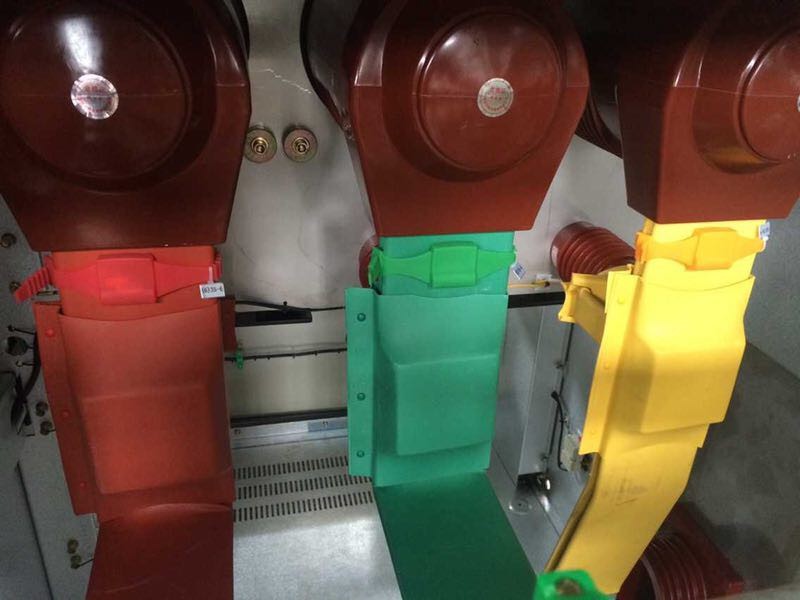
The wireless temperature monitoring system has extremely high reliability and safety, and is inexpensive. It can be directly installed on every high-voltage switch, bus joint, outdoor knife switch or transformer. The system is equipped with standard communication interfaces and can run online. Real time operating temperature data of high-voltage equipment can be recorded through the upper computer software. Accumulated data is provided for the maintenance of high-voltage equipment, realizing the prediction and maintenance of thermal faults in high-voltage equipment.
Temperature measurement collector
The wireless temperature collector is a field temperature monitoring device that integrates monitoring of the working status of temperature sensors, on-site temperature display, alarm prompts and outputs, event recording, and data recording. It can also modify the address and other parameters of the on-site wireless temperature sensor.
major function : Ø Receive Data Ø Clock display Ø Parameter settings Ø ALARM IN Ø Extreme temperature record Ø Temperature alarm record Ø Temperature imbalance record |
Temperature sensor
Wireless temperature sensor (active)
Technical indicators:
Ø Temperature measurement range:-25~+200℃
Ø Measurement accuracy:±1℃(0~75℃),±2℃(-20~150℃)
Ø Temperature sampling frequency: default 1 minute
Ø Wireless frequency:2.4GHz/433MHz
Ø Wireless transmission distance:≤10metre(2.4GHz)/≤200metre(433MHz)
Ø Battery life: 8 years
Ø Installation method: bundled
Ø Dimensions: Main body dimensions: 38mm * 35mm * 24mm, total strap length: 385mm
Wireless temperature sensor (passive)
Technical indicators:
Ø Temperature measurement range:-25~+200℃
Ø Measurement accuracy:±1℃(0~75℃),±2℃(-20~150℃)
Ø Temperature sampling frequency: default 10 seconds
Ø Wireless frequency:2.4GHz/433MHz
Ø Wireless transmission distance: ≤ 10 meters (2.4GHz)/≤ 200 meters (433MHz)
Ø Working power supply: induction power supply
Ø Starting current:> 5A
Ø Installation method: bundled
Ø Dimensions: Main body dimensions: 46mm * 35mm * 21mm, total strap length: 380mm
Transformer adsorption temperature sensor (outdoor)
Technical indicators:
Ø Temperature measurement range:- 25~+200℃
Ø Measurement accuracy: ≤ ±1℃
Ø Temperature sampling frequency: When the change is ≤ 2 ℃, send once every 5 minutes;
When the temperature changes by more than 2 ℃, send once every minute,
Ø Wireless frequency: 433MHz
Ø Wireless transmission distance: ≤ 200 meters
Ø Battery life: 8 years
Installation method: adsorption type
Ø Main body size: 60mm * 45mm * 25mm, total length: 105mm
Installation method: adsorption type
2.2 Partial discharge system
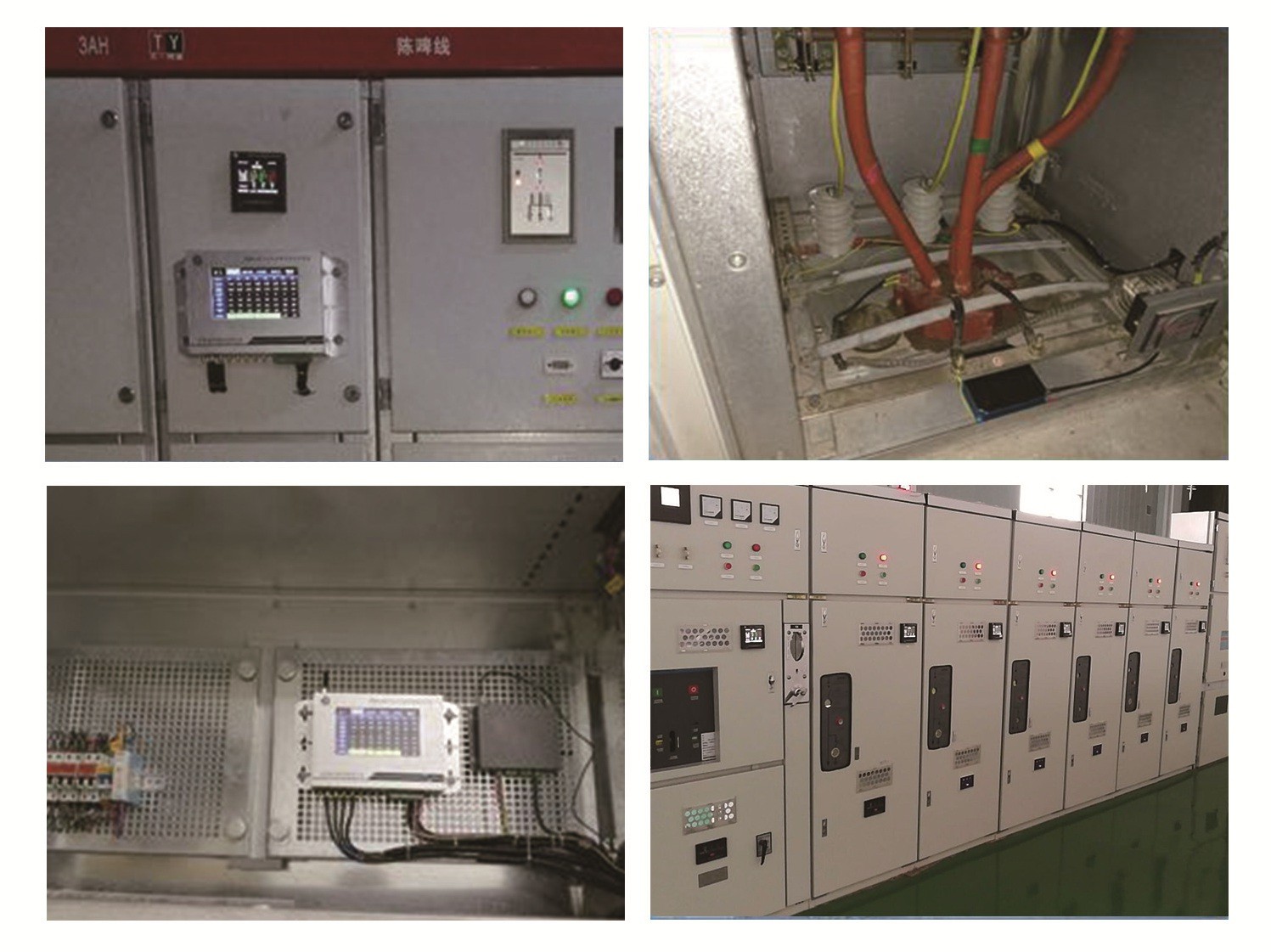
The partial discharge monitoring system mainly monitors the partial discharge of switchgear and ring main unit in the 66kV and below distribution network system. The system integrates the monitoring of partial discharge of switchgear inside the cabinet, temperature measurement, display, signal alarm and other functions to achieve effective monitoring of the operation status of distribution equipment by users. By using flexible installation methods, the on-site problems of complex structure, harsh operating environment, and ever-changing defect types of the monitored equipment can be solved. Through big data technology, the "qualitative, quantitative, positioning, and phased" requirements for live equipment detection can be addressed. Economically and effectively solving the problems of state monitoring and defect diagnosis plays an extremely important role in the safe and reliable operation of distribution equipment and the emergency repair decisions of power enterprises.
Partial discharge collector
Functional Features
Ø Insulation status monitoring and temperature monitoring function
ØPartial discharge detection technology based on ultra-high frequency method
ØContact temperature measurement provides more accurate and reliable temperature monitoring data
ØDesign of temperature sensor based on wireless transmission technology, easy to install
ØAdaptive anti-interference technology can effectively identify interference signals
ØContinuous real-time monitoring curves can accurately grasp the trend of equipment status
ØHistorical fault query function, which can quickly query the fault history records on a monthly basis and sequentially query them all
Technical indicators:
Ø Function configuration: Insulation monitoring, temperature monitoring
Ø Power supply voltage: 220V, 85V~265V, AC
220V,120V~380V, DC
Ø Power supply: 10W
Ø Dimensions: 244 × 178 × 55 (mm)
Ø On site display: 7.0-inch color LCD, 24K colors, 800 × 480 dot matrix, touch screen
ØAlarm output: 220VAC/3A (rated load), 30VDC/3A (rated load)
Ø Contact type: a set of conversion contacts
Partial discharge sensor
Ultra high frequency partial discharge sensor
Technical indicators:
Ø Working frequency band:500MHz~3GHz
Ø Matching impedance:50 Ω
Ø measuring range: 0 dBmV~70dBmV
Ø measurement accuracy :-60dBm(=0.001μW)
Ø Antenna size:126×126×25(mm)
Pulse current partial discharge sensor
Technical indicators:
Ø measuring range: 100-5000pC
Ø Toad belt range: 100kHz-5MHz
Ø Monitoring variables: discharge intensity, discharge limit, average intensity
Ø Discharge limit: not exceeding 9000 (1S)
Ø Alarm output: 220VAC/3A (rated load); 30VDC/3A (rated load)
Ø Contact type: a set of conversion contacts
4、 Typical Configuration List
ID | product name | Simplified version | Basic type | High end model | Fully equipped type |
1 | access control |